
✓
Correct sizing for your household
We size around your actual simultaneous hot water use (showers, laundry, dishwasher) and local incoming water temperature, so performance matches real life instead of brochure numbers.
Serving Oklahoma City, Oklahoma & surrounding areas
We’re Available Until 10 PM Today · Call Now +1 405 876 5040
Natural gas tankless service · Oklahoma City
Get dependable, on-demand hot water with a properly sized gas unit, correct venting, and code-aware installation for Oklahoma City homes.
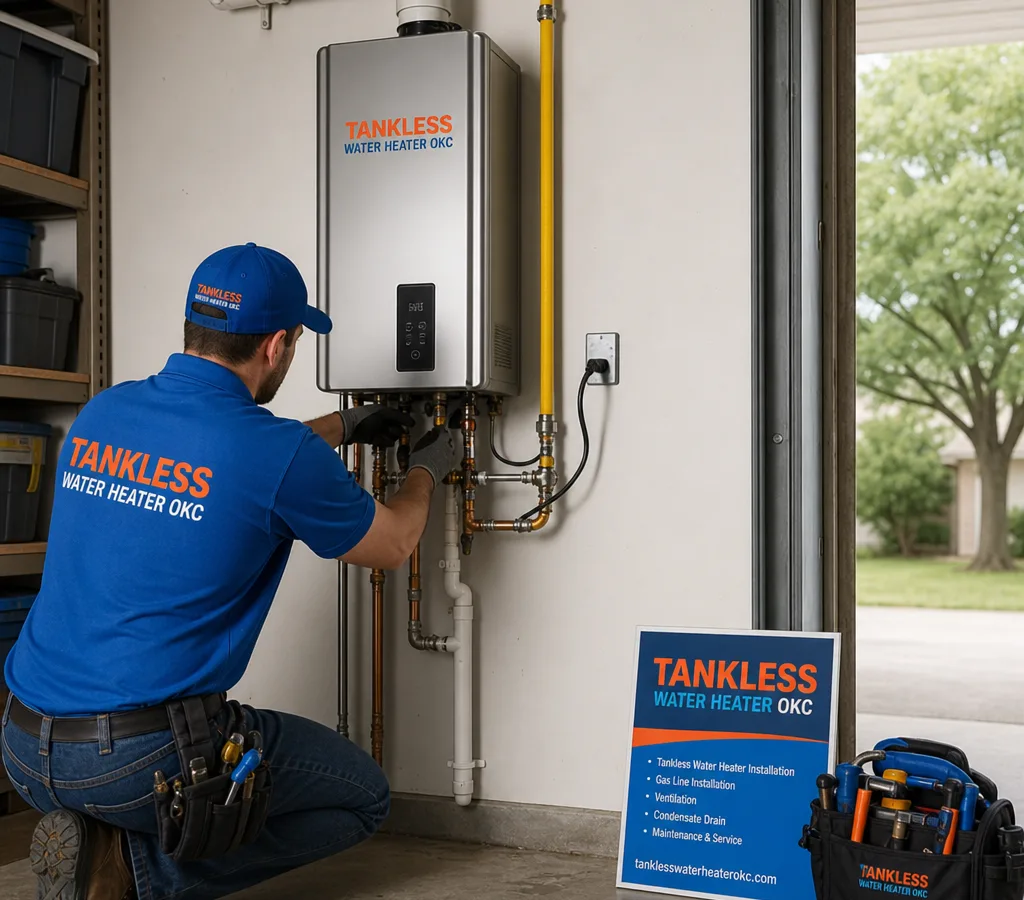
If you are searching for natural gas tankless water heater oklahoma service, you are usually trying to solve one of three problems: running out of hot water, high standby loss from a tank unit, or a water heater that is nearing the end of its life. A gas tankless unit can be a good fit in Oklahoma City, but only when it is sized for your real demand and installed with the right gas supply, venting, and condensate handling.
Tankless Water Heater OKC installs and replaces natural gas tankless water heaters for homes across Oklahoma City (73111 and surrounding areas). We focus on practical outcomes: stable hot water at the fixtures you use most, safe combustion air and venting, and a setup that can be maintained without tearing apart walls later.
Many issues we fix are avoidable. A unit that is undersized will feel fine at one shower and fail when the dishwasher or a second shower starts. A unit with marginal gas sizing can throw ignition or flame errors. Venting that is wrong for the model can create nuisance shutdowns and safety risks. This is why the install details matter as much as the brand on the front.
System performance starts with planning
We size around your actual simultaneous hot water use (showers, laundry, dishwasher) and local incoming water temperature, so performance matches real life instead of brochure numbers.
Many tankless models require higher BTU input than a tank-style heater. We verify gas line capacity and routing so the unit can fire reliably without starving other gas appliances.
Tankless venting is model-specific. We follow the manual for vent type, length limits, terminations, and clearances to reduce shutdowns and protect indoor air quality.
High-efficiency condensing units produce condensate that must be drained correctly. We plan the drain route and protections so it does not create water damage or corrosion issues.
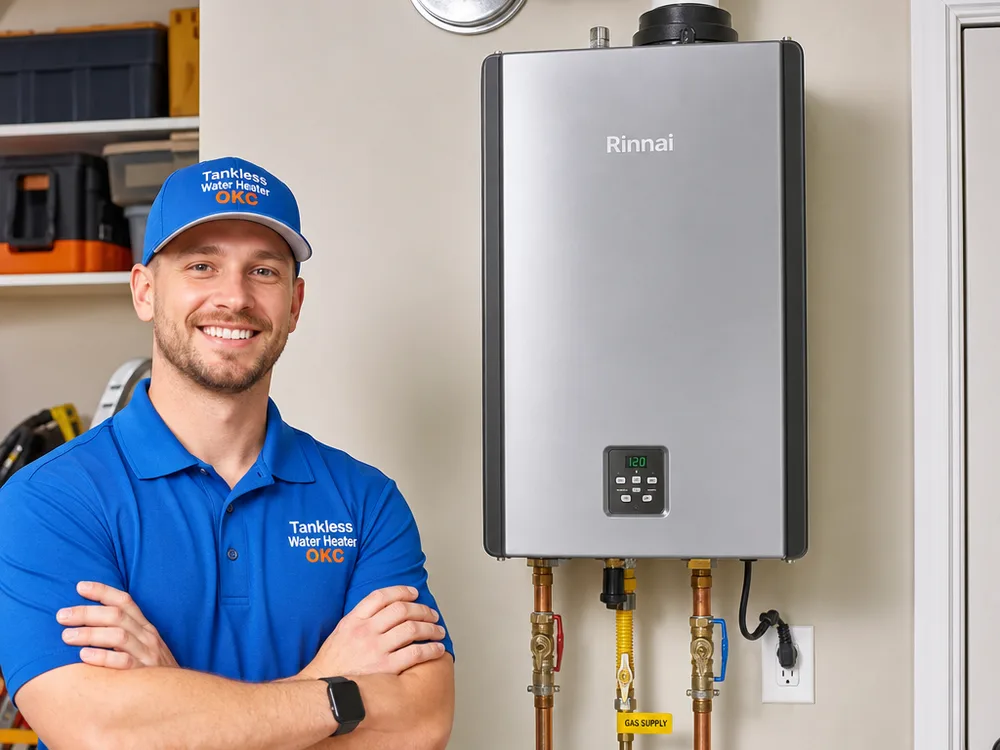
A tankless heater needs periodic flushing and inspection. We install with valves and access in mind so routine service stays simple and affordable.
Gas, venting, water quality, and demand
A natural gas tankless water heater is not a direct swap in many OKC homes. The appliance often needs more gas input than the old tank unit, different venting, and a new condensate plan.
Gas line sizing and load checks: We look at the total gas load in the home and the run length to the new heater. If the existing line is undersized, the heater may start, then shut down under demand. Correcting this upfront prevents intermittent errors that are hard to diagnose later.
Venting and termination placement: Direct-vent units pull combustion air from outdoors and vent exhaust outdoors through approved piping. Placement and clearances matter, especially when the heater is near windows, doors, soffit vents, or tight side yards.
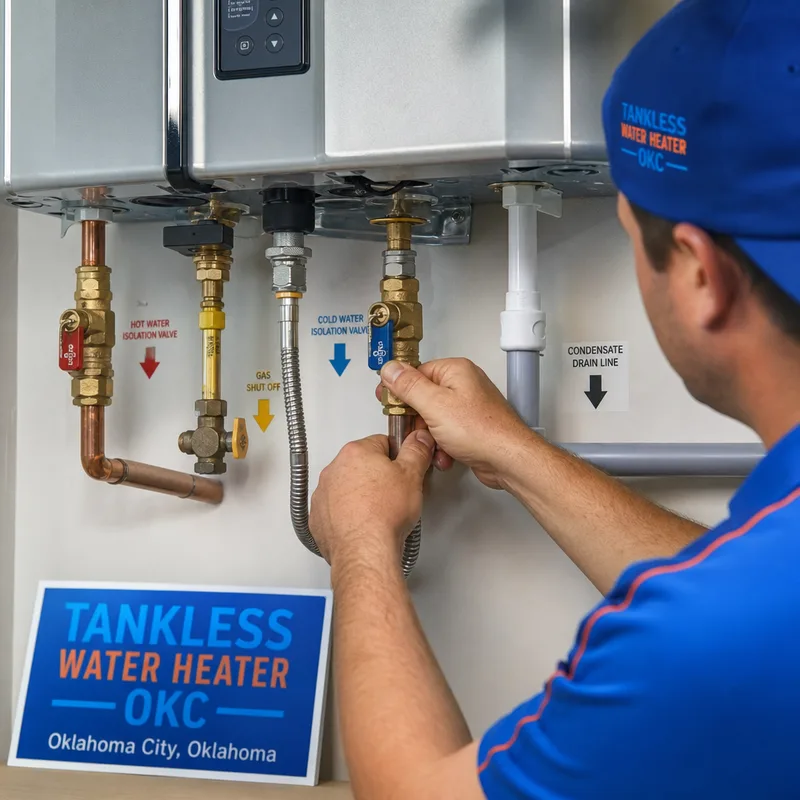
Water quality and maintenance setup: Scale is a common performance killer for tankless systems. We can set the unit up with isolation valves so a future flush is straightforward. If you are also planning broader work beyond this natural gas tankless project, our core work stays focused, but you can still start with a broader water heater installation in Oklahoma City plan so everything fits together cleanly.
Cold snaps and comfort expectations: When Oklahoma weather swings, incoming water temperature changes and can affect maximum hot-water output. Proper sizing and realistic expectations around simultaneous use make the difference between a tankless system you love and one you regret.
From assessment through startup
We review fixture demand, placement options, vent route, gas supply, and drainage for condensate (if applicable). If you are replacing an existing unit, we confirm what can be reused and what should be updated.
You get a clear scope of work that spells out the venting approach, gas piping needs, water piping changes, shutoffs, and any code-required items so you can make a clean decision.
We isolate utilities, remove the old water heater when applicable, and prepare mounting, piping, and vent pathways for the new tankless unit.
We set the unit, connect hot and cold lines, address gas piping, complete the vent system per the manufacturer, and route condensate where required.
We bring the system online, check for leaks, verify operation under demand, and show you the basics of maintenance and what error signs should prompt a service visit.
Planning your investment
In Oklahoma City, a natural gas tankless water heater installation typically ranges from about $3,000 to $7,500+, depending on the unit, venting, and whether gas line upgrades are needed. A more straightforward replacement where venting and gas capacity are already suitable may fall toward the lower end, while longer vent runs, condensate routing, and gas repiping push cost higher.
Final pricing changes with heater capacity, vent type (and termination location), access to the install area, permit requirements, and how much piping must be reworked. The exact cost is confirmed after an on-site assessment of your current setup.
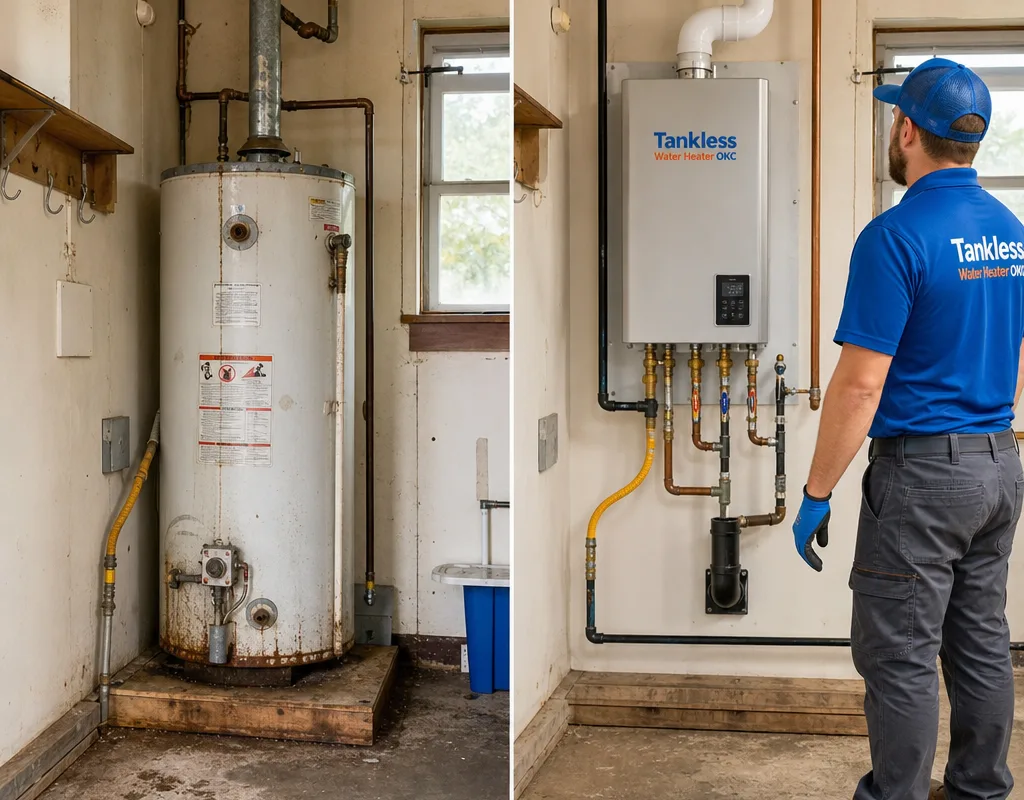
Clean, serviceable installation work
Straight answers before installation
Sometimes yes, but many homes need a gas line adjustment because tankless units can require higher BTU input than a tank heater. We check the existing line size, run length, and other gas appliances so the heater can fire consistently without causing pressure drop issues.
In many replacements, yes, because tankless venting is specific to the model and efficiency type. We follow the manufacturer's vent material and length limits, and we plan the termination location so it meets clearance requirements near openings and eaves.
A condensing unit can be a good choice when you want higher efficiency and you have a practical place to route condensate drainage. The tradeoff is added install complexity, so we confirm the drain path, protections, and service access before recommending that style.
Most installations take a day, but a tank-to-tankless conversion can take longer when gas piping and venting have to be reworked. We set expectations after seeing the existing heater location and the shortest safe vent route.
Plan on periodic flushing and a basic inspection of filters, venting, and combustion performance. We typically install isolation valves to make flushing practical, and we will show you what access points matter so maintenance does not turn into a major project.
That usually points to an undersized unit, a flow sensor issue, a gas supply limitation, or a venting/combustion problem causing the unit to throttle or shut down. A proper sizing review and a full install check (gas, vent, and water flow) is the fastest way to pinpoint the cause.
Yes, and it is often straightforward, but we still verify vent compatibility, gas capacity, and any code updates since the last installation. Even small changes in model requirements can affect vent material, maximum vent length, or condensate needs.
If you want reliable hot water without guessing, start with an on-site assessment so the unit size, gas supply, and vent plan are correct before anything gets installed.
Call Now for ServiceConfirm the system fit before installation
Tell us what you have now and what problems you are trying to solve. We will confirm feasibility, explain the venting and gas requirements, and provide a written scope with upfront pricing.